When the 2019 bushfires swept through the South Coast of NSW, the home on this Malua Bay block didn’t survive. What rose in its place is one of the most compelling arguments for hempcrete in Australia: a three-bedroom, two-bathroom home designed by Kirstie Wulf of Shelter Building Design that meets the highest bushfire attack level ratings available, fits the excavated footprint of the original dwelling, and sequesters carbon in its walls while it does it. Built by Jace Vapore of JV Building, the Malua Bay Bush Fire Rebuild is proof that rebuilding after disaster doesn’t mean returning to what was there before, it means building something far better.
The owners had explored other paths before settling on hempcrete. An earth-covered home was considered but proved financially out of reach. A referral through a local Greens councillor, himself a long-term hempcrete client of Kirstie’s who has told anyone who will listen how much he loves his house, brought Shelter Building Design into the picture. From there, the brief crystallised quickly: non-combustible above all else, but also more sustainable, lower energy, and designed to make the most of the northern light and eastward valley views the site had always offered.
Performance Features
High Bush Fire Attack Level rating
Special Features
Hemp port-hole truth window
The resulting form is slightly unconventional in plan. Shaped by the excavated footprint of the original dwelling and the work required to capture both northern sun and eastern views from the same building. At 157m² on a 22,499m² semi-rural block, it’s a single-storey home that wears its constraints lightly. Gutter guards and a carefully considered roofline handle ember protection. Large east and north-facing windows draw morning light deep into the living spaces and frame views across the valley, while generous eaves and a sheltering hill manage the harsher western afternoon sun as summer peaks. The concrete slab beneath it all acts as a thermal battery, cool in summer, warm in winter, releasing stored energy back into the house long after the sun has moved on.
"The brief really was non-combustible, but they also wanted to build back more sustainably, a house that used less energy"
Kirstie Wulf
Shelter Building Design Founder
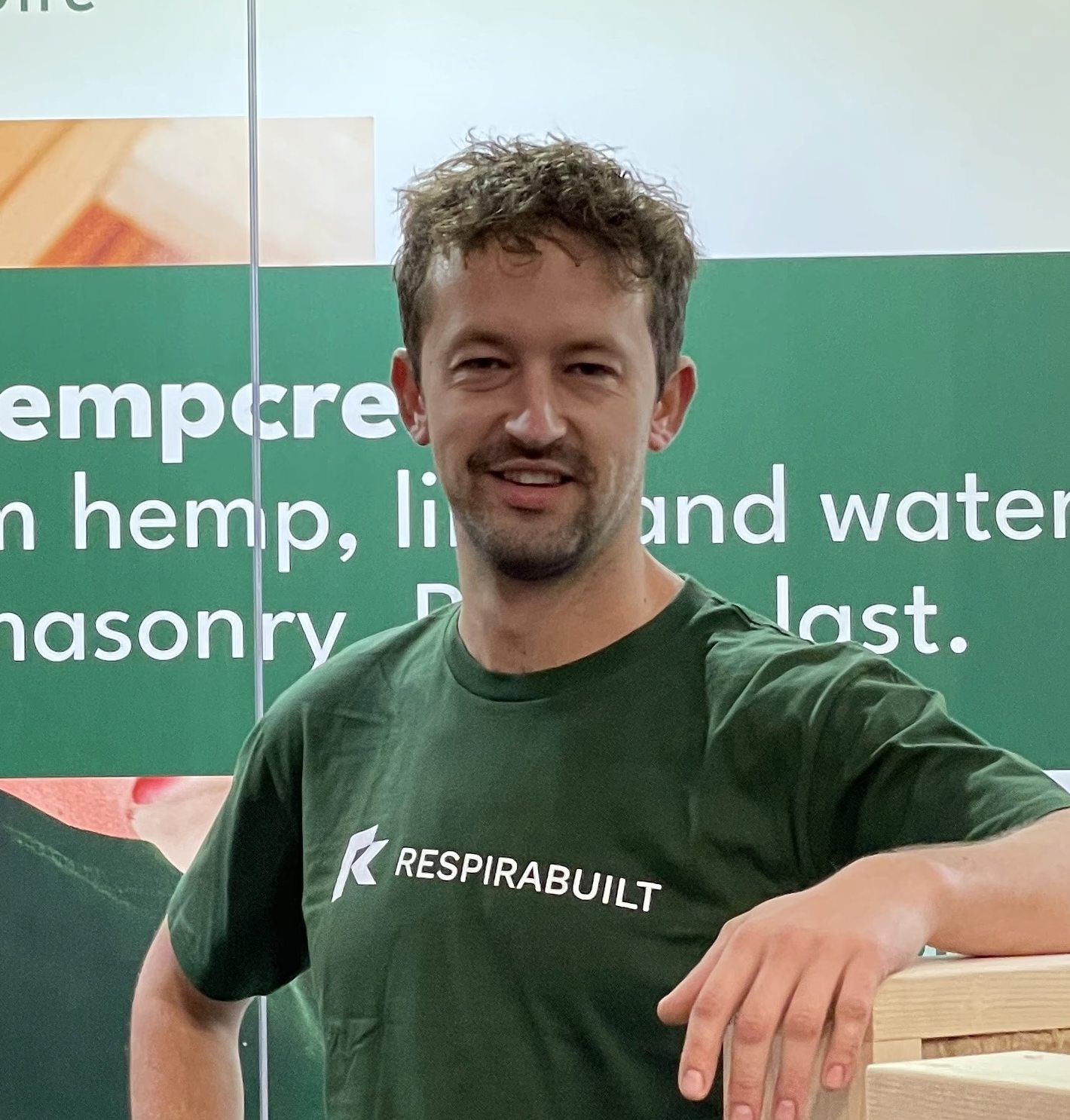
The hempcrete installation on the Malua Bay Bush Fire Rebuild used a hybrid method pioneered by Will Brain of Respirabuilt and Hempcrete Victoria. Prefabricated Respirabuilt hempcrete blocks were installed on the exterior, laid much like conventional masonry, while cast-in-situ hempcrete was used on the interior, both wrapping a timber frame. The approach cuts formwork labour significantly: with the blocks forming one side of the wall cavity, formwork is only needed on the internal face rather than both sides. That cost saving makes hempcrete accessible to a broader range of budgets without sacrificing any of its fire, thermal, or acoustic performance.
The bricklayer on this job was 70 years old, and was genuinely surprised at how fast and easy the Respirabuilt blocks were to handle compared to conventional masonry. That’s a detail worth pausing on. Hempcrete construction has a reputation for being specialist work, but the block system opens the process to tradespeople who already know how to lay a wall. The material does the rest.
The hempcrete installation on the Malua Bay Bush Fire Rebuild used a hybrid method pioneered by Will Brain of Respirabuilt and Hempcrete Victoria. Prefabricated Respirabuilt hempcrete blocks were installed on the exterior, laid much like conventional masonry, while cast-in-situ hempcrete was used on the interior, both wrapping a timber frame. The approach cuts formwork labour significantly: with the blocks forming one side of the wall cavity, formwork is only needed on the internal face rather than both sides. That cost saving makes hempcrete accessible to a broader range of budgets without sacrificing any of its fire, thermal, or acoustic performance.
Will’s bricklayer on this job was 70 years old, and was genuinely surprised at how fast and easy the Respirabuilt blocks were to handle compared to conventional masonry. That’s a detail worth pausing on. Hempcrete construction has a reputation for being specialist work, but the block system opens the process to tradespeople who already know how to lay a wall. The material does the rest.
"To the outsider it's very surprising that a wall made out of plant cellulose can actually achieve the highest fire rating."
Will Brain
Respirabuilt & Hempcrete Victoria
Inside, hempcrete announces itself through sound before anything else. Moving from a plastered corridor into an unrendered hempcrete room, the acoustic shift is immediate, reverb drops away, the space quietens. A dedicated media room off the main hallway leans into this quality deliberately, its exposed hempcrete walls doing passively what acoustic panels try to replicate artificially. Bathrooms are tiled in blue, green, and aqua, a quiet reference to the waters around nearby Batemans Bay, while the laundry carries the same raw hempcrete finish as the rest of the home. Double-glazed windows throughout complete the thermal envelope, working in concert with the walls to minimise any heating or cooling load.
As Jeremy notes standing in the house: fire rating, thermal performance, sound insulation, breathability, and carbon storage. Five reasons, one material, right off the top of the tongue.
The hempcrete installation on the Malua Bay Bush Fire Rebuild used a hybrid method pioneered by Will Brain of Respirabuilt and Hempcrete Victoria. Prefabricated Respirabuilt hempcrete blocks were installed on the exterior — laid much like conventional masonry — while cast-in-situ hempcrete was used on the interior, both wrapping a timber frame. The approach cuts formwork labour significantly: with the blocks forming one side of the wall cavity, formwork is only needed on the internal face rather than both sides. That cost saving makes hempcrete accessible to a broader range of budgets without sacrificing any of its fire, thermal, or acoustic performance.
Will’s bricklayer on this job was 70 years old — and was genuinely surprised at how fast and easy the Respirabuilt blocks were to handle compared to conventional masonry. That’s a detail worth pausing on. Hempcrete construction has a reputation for being specialist work, but the block system opens the process to tradespeople who already know how to lay a wall. The material does the rest.